Are We Losing Our Jobs to AI? A Deep Dive into Automation's Impact on the Workforce
The rapid advancement of artificial intelligence sparks concern about job displacement. This article explores the nuanced reality of AI's impact on employment, distinguishing hype from evidence.
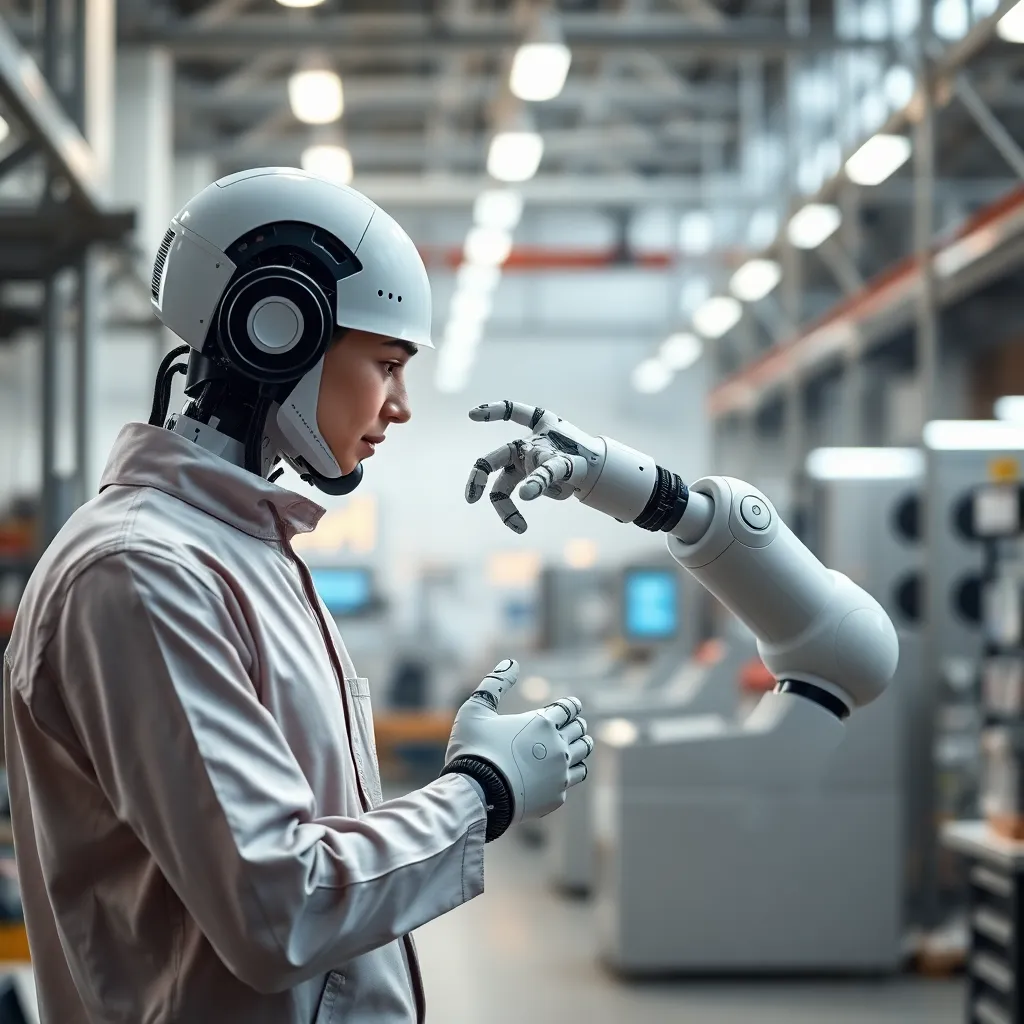
The conversation surrounding artificial intelligence (AI) frequently pivots to a crucial and often anxieties-inducing question: are we losing our jobs to AI? This query, while seemingly straightforward, unravels a complex tapestry of technological progress, economic shifts, and societal adaptations. From factory floors to executive suites, the specter of automation looms, prompting widespread debate about the future of work and the very nature of human employment. While some envision a dystopian future of mass unemployment, a more nuanced examination reveals a dynamic interplay of job displacement, creation, and transformation.
Key Takeaways
- AI is more likely to augment human capabilities and transform existing jobs than to lead to widespread, complete job elimination in the short term.
- Routine, repetitive, and prediction-based tasks are most susceptible to automation, shifting the demand towards skills requiring creativity, critical thinking, and emotional intelligence.
- Historical precedent suggests technological advancements often create more jobs than they destroy, albeit with significant shifts in skill requirements.
- Proactive reskilling, upskilling, and adaptable education systems are critical for navigating the evolving labor market.
- Policymakers and businesses must collaborate to implement supportive frameworks, including social safety nets and investment in human capital, to mitigate adverse impacts.
The Historical Echoes of Automation Fears
The apprehension surrounding AI-driven job displacement is not a new phenomenon. History is replete with examples of technological innovations sparking similar concerns. The Luddite movement of the early 19th century, in which textile workers destroyed machinery, serves as a poignant reminder of the anxieties unleashed by the Industrial Revolution. Each wave of automation, from the mechanization of agriculture to the advent of computers, has elicited fears of widespread unemployment. Yet, each time, economies have adapted, new industries have emerged, and the nature of work has evolved.
What distinguishes the current AI revolution is its perceived speed and pervasiveness. Unlike previous technologies that primarily impacted manual labor, AI's cognitive capabilities extend its influence to professional and white-collar occupations, leading some to argue that "this time is different." While the scale and scope of AI's impact are undeniably significant, understanding its mechanisms is crucial to formulating effective responses.
Disaggregation of Tasks, Not Wholesale Job Replacement
A critical distinction often overlooked in the "AI taking jobs" narrative is that AI, in its current state, is more adept at automating specific tasks within a job rather than replacing entire occupations. Researchers frequently emphasize this "task-based" approach. For example, an accountant's job comprises various tasks: data entry, reconciliation, financial analysis, client communication, and strategic advising. AI and automation tools can efficiently handle the repetitive and data-intensive aspects, such as data entry and initial reconciliation, freeing the accountant to focus on higher-level analytical tasks, strategic insights, and client relationships.
This phenomenon, known as job augmentation, suggests that AI will primarily change how humans perform their jobs. Instead of rendering human workers obsolete, AI acts as a powerful co-pilot, enhancing productivity, accuracy, and efficiency. This shift elevates the demand for "human-centric" skills that AI struggles with, such as creativity, abstract reasoning, emotional intelligence, complex problem-solving, and interpersonal communication. Read more about this shift in skills.
Sectors and Roles Most Susceptible to Automation
While complete job annihilation is less common, certain sectors and roles are indeed more vulnerable to significant disruption. These typically involve tasks that are:
Repetitive and routine: Jobs with highly standardized, predictable workflows, such as manufacturing assembly lines, basic data entry, and some administrative support roles.
Prediction-based: Roles that involve interpreting large datasets to make predictions, where AI algorithms can often outperform humans in speed and accuracy, such as certain aspects of financial trading or medical diagnostics.
Cognitive but rules-based: Tasks that follow explicit rules and logic, like legal research or coding simple scripts, can increasingly be handled by AI.
Industries such as transportation (autonomous vehicles), manufacturing (robotics), customer service (chatbots), and back-office operations (robotic process automation) are already experiencing significant shifts. However, even in these sectors, the trend is often towards collaborative human-AI systems rather than complete replacement. A fully autonomous vehicle still requires human oversight, maintenance, and complex logistical management.
The Rise of New Roles and Industries
Just as past technological revolutions created new forms of employment, AI is expected to be a powerful engine for job creation. While specific new roles are difficult to perfectly predict, several categories are already emerging:
AI Developers and Engineers: The ongoing need to design, build, train, and maintain AI systems will drive demand for specialized technical talent.
Data Scientists and Analysts: Expertise in managing, interpreting, and deriving insights from the vast amounts of data that fuel AI is becoming increasingly crucial.
AI Ethicists and Governance Experts: As AI becomes more integrated into society, roles focusing on responsible AI development, bias mitigation, and ethical guidelines will be vital.
Prompt Engineers and AI Communicators: As large language models become more prevalent, individuals skilled in crafting effective prompts to elicit desired outcomes will be in demand.
Human-AI Collaboration Specialists: Roles focused on optimizing the interaction and workflow between human workers and AI systems.
Beyond these direct AI-related jobs, the increased productivity and new capabilities unlocked by AI will likely spur innovation in other sectors, leading to unforeseen economic growth and job opportunities. The potential for AI to accelerate scientific discovery, personalize education, and revolutionize healthcare suggests entirely new industries could emerge, generating novel employment categories. Explore more on the future of technology.
The Imperative of Reskilling and Upskilling
Amidst the transformations, the most significant challenge lies in ensuring that the workforce possesses the skills necessary for the jobs of tomorrow. This necessitates a proactive and systemic approach to education and training:
Lifelong Learning: The concept of a static career path built on initial education is increasingly obsolete. Continuous learning, reskilling for new roles, and upskilling to enhance existing capabilities will become the norm.
Focus on Soft Skills: Critical thinking, creativity, emotional intelligence, adaptability, and complex problem-solving are skills that AI struggles to replicate. Investing in these "human skills" will be paramount.
STEM and Digital Literacy: A foundational understanding of science, technology, engineering, and mathematics, coupled with strong digital literacy, will be crucial across a wide range of professions.
Government and Industry Collaboration: Public and private sectors must collaborate to identify in-demand skills, develop relevant training programs, and provide accessible pathways for workers to transition into new roles. Learn about the role of education in an evolving economy.
Policy Responses and Social Safety Nets
Addressing the potential for job displacement and ensuring an equitable transition requires robust policy responses. These might include:
Enhanced Social Safety Nets: Exploring options like Universal Basic Income (UBI) or expanded unemployment benefits to support individuals during periods of transition or if sufficient new jobs do not materialize at the required pace.
Investment in Infrastructure and Green Technologies:** Government investment in areas like sustainable energy, advanced manufacturing, and digital infrastructure can create new jobs that may not be easily automated.
Labor Market Policies: Rethinking labor laws, promoting flexible work arrangements, and fostering entrepreneurship can help adapt to a rapidly changing economic landscape. International Cooperation: Given AI's global impact, international collaboration on skill standards, ethical guidelines, and economic transitions will be increasingly important. Understand the global implications of AI.
Ultimately, the question of whether we are "losing our jobs to AI" is too simplistic. A more accurate framing is that jobs are evolving, tasks are being reallocated, and the demand for human skills is shifting. The future of work will likely be characterized by a profound partnership between humans and intelligent machines, where the ability to adapt, learn, and leverage uniquely human attributes will be the ultimate competitive advantage.
Frequently Asked Questions
Will AI lead to widespread mass unemployment?
Most experts believe widespread mass unemployment due to AI is unlikely in the short to medium term. Instead, AI is expected to transform existing jobs, automate routine tasks, and create new roles, requiring a significant shift in skills and ongoing education.
What types of jobs are safest from AI automation?
Jobs that require high levels of creativity, critical thinking, complex problem-solving, emotional intelligence, interpersonal communication, and deep human judgment are generally considered safest from full automation. These include roles in creative arts, strategic management, counseling, advanced scientific research, and complex healthcare.
How can individuals prepare for the AI-driven future of work?
Individuals can prepare by committing to lifelong learning, focusing on developing "human skills" (creativity, critical thinking, emotional intelligence), pursuing digital literacy, and seeking training in fields related to AI development, data science, and human-AI collaboration. Adaptability and a growth mindset will be key. This preparation should ideally begin early in educational pathways and continue throughout one's career. Technology and business leaders are also exploring new paradigms such as human-in-the-loop systems to ensure continuity. Discover emerging business strategies in the age of AI.
What role do governments and businesses play in this transition?
Governments and businesses have a crucial role in facilitating a smooth transition. This includes investing in education and training infrastructure, developing supportive labor market policies, exploring social safety nets, fostering innovation, and ensuring ethical AI development. Collaboration between these sectors is essential to mitigate negative impacts and maximize the benefits of AI for society. This includes, for example, establishing frameworks for responsible AI development and deployment, which can ensure that as AI becomes more integrated into the economy, its benefits are widely distributed and its risks are managed effectively. These proactive measures are vital for shaping a future where technology serves humanity, rather than displacing it without recourse.