Brain–Computer Interfaces: How Mind-Control Technology is Quietly Transforming the Future
Brain–Computer Interfaces (BCIs) are emerging technologies that connect the human brain directly to machines, allowing thoughts to control devices without physical movement. From helping paralyzed patients walk again to enabling “mind-typing,” this futuristic innovation is no longer science fiction—it’s becoming reality.
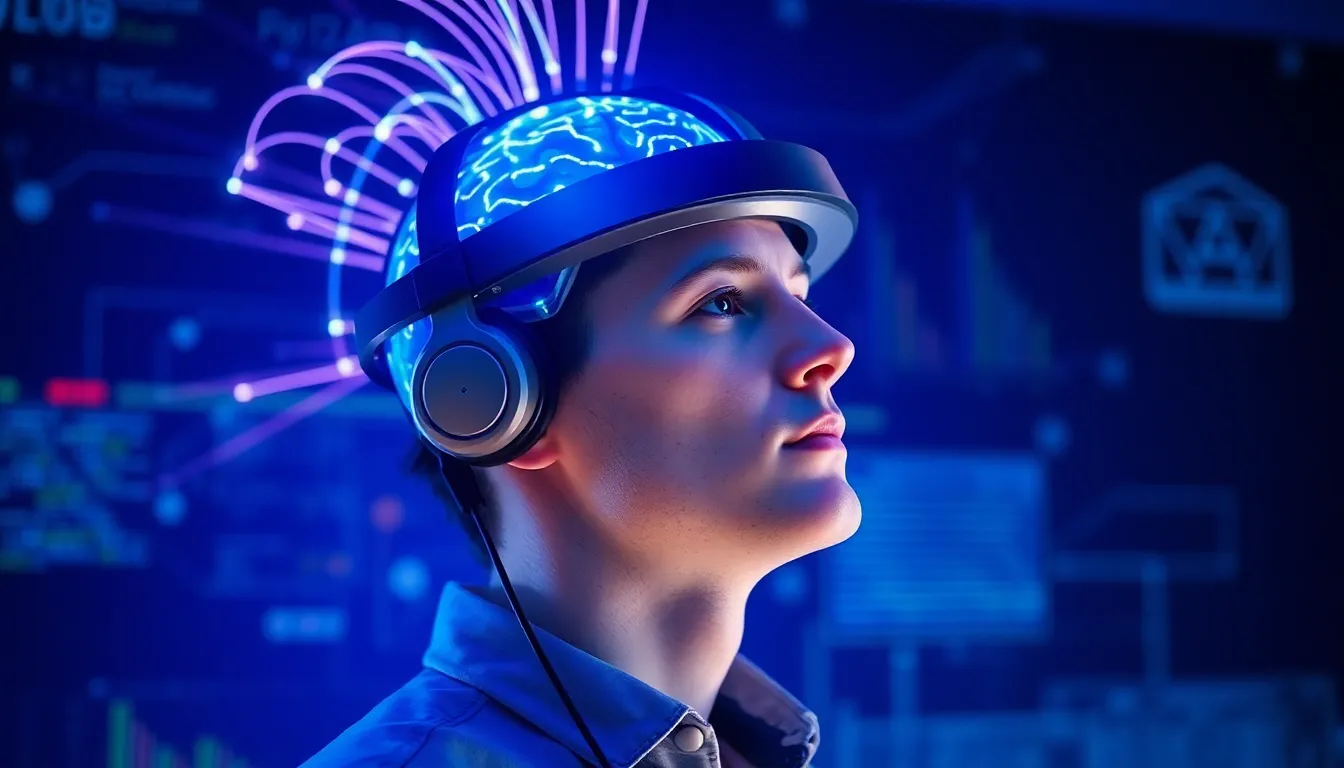
The Idea That Once Sounded Impossible
Imagine being able to type a message, move a robotic arm, or even control a computer game—without touching anything. Just thinking about it is enough.
This is the world of Brain–Computer Interfaces (BCIs), often described as “mind-control technology.” While the phrase may sound like science fiction, BCIs are real and developing quickly, blending neuroscience, engineering, and artificial intelligence into one powerful field.
At its core, a BCI is a system that reads signals from the brain and translates them into commands for external devices. Instead of using hands, voice, or touch, the brain itself becomes the controller.
How Brain–Computer Interfaces Actually Work
Your brain constantly produces electrical activity as neurons communicate. BCIs capture these signals using sensors placed on or inside the head.
There are generally two types:
Non-invasive BCIs: These use external devices like EEG caps placed on the scalp to read brain activity. They are safer and widely used in research and consumer experiments. Invasive BCIs: These involve surgically implanted chips that can read signals more precisely. They are still experimental but far more accurate.
Once the brain signals are captured, software powered by machine learning decodes them into meaningful actions—like moving a cursor, selecting letters, or controlling prosthetic limbs.
Real-Life Uses That Are Already Changing Lives
BCIs are not just theoretical—they are already making a difference.
One of the most powerful applications is in healthcare. People with paralysis or neurological conditions can use BCIs to communicate or control robotic limbs. For someone who cannot speak or move, even small improvements like selecting letters on a screen can restore independence.
Researchers have also developed systems where patients can move robotic arms or wheelchairs using only thought patterns. This is a life-changing development for individuals with spinal injuries or motor neuron diseases.
Another exciting use is in communication technology. Scientists have created early prototypes that allow users to “think” words into text, reducing the need for typing or speaking.
The Role of Companies Like Neuralink
The rise of BCIs has been accelerated by private innovation. One of the most well-known companies in this space is Neuralink, founded by Elon Musk. Its goal is to create high-bandwidth brain implants that could one day allow humans to directly interact with computers.
The vision goes beyond medical use. Some researchers imagine a future where humans could download information, communicate silently, or even enhance memory and cognition through neural links.
While this sounds futuristic, early trials are already underway, though widespread use is still years away.
Why This Technology Matters So Much
BCIs are important because they represent a completely new way of interacting with machines. Instead of adapting humans to computers, BCIs aim to adapt computers to humans.
This shift could transform many industries:
Healthcare: Restoring movement and communication abilities Education: Personalized learning through cognitive tracking Gaming: Immersive experiences controlled by thought Work environments: Faster interaction with digital systems
It is not just about convenience—it is about accessibility, empowerment, and human potential.
The Challenges We Still Face
Despite its promise, BCI technology is still in its early stages. There are major challenges to solve.
First is accuracy. The brain is incredibly complex, and interpreting signals correctly is difficult. Misreading signals can lead to errors in control.
Second is safety, especially for implanted devices. Surgery always carries risks, and long-term effects are still being studied.
Third is cost. Advanced BCI systems are expensive and not widely accessible yet.
Finally, there are ethical questions. If technology can read brain signals, how do we protect mental privacy? Could thoughts be misused or hacked in the future? These concerns are still being explored.
The Future: Where Are We Heading?
Even with challenges, the progress is rapid. Many experts believe BCIs will become more common in the next 10–20 years.
In the near future, we may see:
Lightweight headsets for everyday use Thought-controlled smart devices Improved prosthetics that feel natural Early versions of cognitive enhancement tools
In the long term, BCIs could blur the line between human intelligence and machine computing. This could reshape how we communicate, work, and even think.
A Quiet Revolution in the Making
Brain–Computer Interfaces are not just another tech trend—they represent a fundamental shift in how humans interact with the digital world. While we are still far from fully “mind-controlled” technology in everyday life, the foundation is already being built.
What once belonged in science fiction is slowly becoming part of real scientific progress. And as research continues, the question is no longer if BCIs will change our world, but how deeply they will reshape it.