Human Rights and Global Justice Movements: Voices for Equality, Dignity, and a Fairer World
Human rights and global justice movements represent the collective effort to protect human dignity, promote equality, and challenge injustice worldwide. These movements bring people together across borders to fight for fairness, freedom, and basic rights for all.
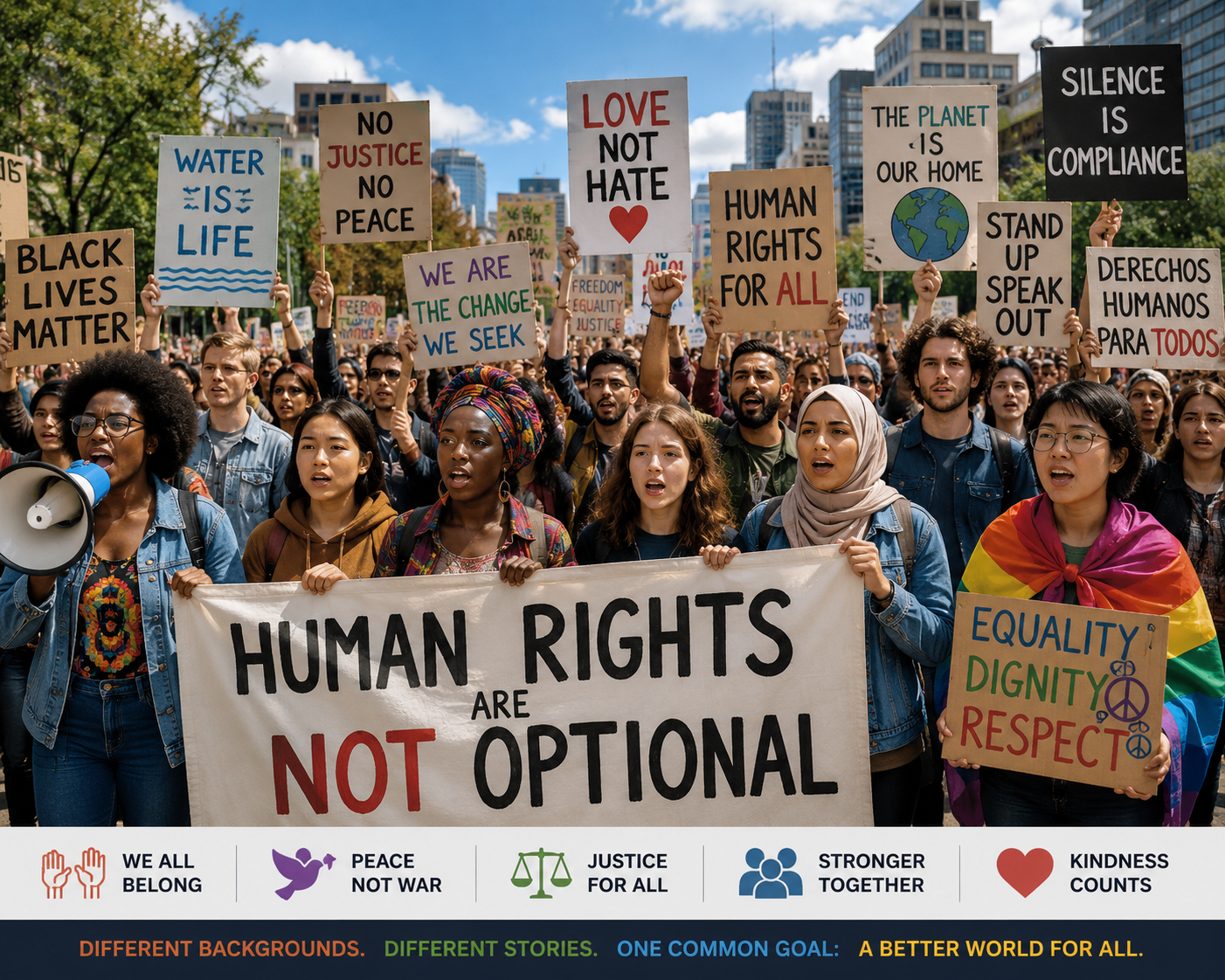
Human Rights and Global Justice Movements: Voices for Equality, Dignity, and a Fairer World Human rights and global justice movements represent one of the most powerful forces for change in human history. They are driven by the belief that every person deserves dignity, fairness, and equal treatment—regardless of nationality, race, gender, religion, or social background. These movements are not limited to one country or culture. They exist across the world, connecting individuals and communities in a shared effort to challenge injustice and promote equality. At their core, they are about people standing up for people. Understanding Human Rights Human rights are the basic freedoms and protections that belong to every individual simply because they are human. These rights include the right to life, freedom of speech, education, safety, and equality before the law. They are universal, meaning they apply to everyone, everywhere. They are also inalienable, meaning they cannot be taken away unjustly. Human rights form the foundation of fair and just societies. Without them, individuals may face discrimination, oppression, or inequality. What Are Global Justice Movements? Global justice movements are collective efforts that aim to address inequality and injustice on a global scale. These movements often focus on issues such as poverty, discrimination, environmental justice, labor rights, and political freedom. Unlike local activism, global justice movements connect people across countries. They Diverse global activists protesting peacefully for human rights and justicerecognize that many challenges—such as inequality, climate change, and human rights violations—are not limited by borders. These movements use awareness campaigns, peaceful protests, legal action, and digital platforms to create change. The Purpose of Human Rights Movements Human rights movements exist to protect and expand the rights of individuals and communities. They often emerge when people face injustice or discrimination. These movements work to raise awareness, influence laws, and hold governments or organizations accountable. They are driven by the idea that fairness and dignity should not depend on where someone is born or what background they come from. Equality and Social Justice Equality is a central principle of human rights and global justice. It means that all people should have the same opportunities and protections under the law. However, in reality, inequality still exists in many forms. Some people face barriers based on gender, race, economic status, or other factors. Social justice movements aim to address these inequalities by promoting fairness and equal access to resources, education, and opportunities. They seek to create societies where everyone has the chance to succeed and live with dignity. The Role of Activism Activism is the driving force behind human rights and global justice movements. Activists are individuals or groups who work to bring attention to injustice and push for change. They may organize peaceful protests, create awareness campaigns, engage in legal advocacy, or use digital platforms to share information. Activism often requires courage, persistence, and resilience. Many movements have faced resistance, but they continue to grow because of strong belief in justice and equality. Historical Roots of Human Rights Movements Human rights movements have deep historical roots. Over time, people have organized to challenge injustice and demand equal rights. Many important social changes have come from these movements, including the expansion of voting rights, the end of discriminatory laws, and improvements in labor conditions. These historical struggles continue to inspire modern movements that fight for justice in new forms. Globalization and the Spread of Movements Globalization has played a major role in shaping modern justice movements. With increased communication and travel, ideas and information now spread more quickly than ever before. Social media and digital platforms allow movements to reach global audiences instantly. A local issue can quickly gain international attention, leading to widespread support. This global connection has strengthened movements and made collective action more powerful. The Role of International Organizations International organizations play an important role in supporting human rights. They help establish global standards, monitor violations, and provide platforms for dialogue and cooperation. These organizations work with governments, non-governmental organizations, and activists to promote justice and accountability. They also help provide humanitarian aid and support to communities affected by conflict, discrimination, or crisis. Challenges Faced by Movements Despite their importance, human rights and global justice movements face many challenges. One major challenge is resistance from political or economic systems that may not support change. Activists may face restrictions, opposition, or even personal risk. Another challenge is misinformation, which can spread quickly and weaken public understanding of issues. Sustaining long-term engagement is also difficult, as social change often takes time and persistence. The Power of Collective Action One of the most powerful aspects of global justice movements is collective action. When people come together, their voices become stronger and more impactful. Collective action can influence public opinion, shape policies, and bring attention to issues that might otherwise be ignored. It shows that change is possible when individuals unite around a shared goal. Digital Activism and Modern Movements Technology has transformed how human rights movements operate. Digital activism allows people to share information, organize events, and raise awareness online. Hashtags, online petitions, and social media campaigns have become powerful tools for spreading messages quickly. This digital shift has made activism more accessible, allowing more people to participate regardless of location. However, it also requires careful attention to accuracy and responsible communication. The Importance of Awareness and Education Education plays a key role in supporting human rights and justice movements. When people are aware of their rights and the rights of others, they are better equipped to advocate for fairness. Awareness also helps reduce prejudice and misunderstanding. It encourages empathy and understanding across different communities. Educational programs and public discussions help strengthen the foundation of justice movements. Human Rights as a Shared Responsibility Protecting human rights is not the responsibility of one group or nation—it is a shared global responsibility. Governments, organizations, and individuals all play a role in promoting fairness and dignity. Even small actions, such as speaking out against injustice or supporting fair practices, contribute to larger change. The Emotional Side of Justice Movements Behind every movement are human stories—stories of struggle, hope, and resilience. People involved in these movements are often motivated by personal experiences or a deep sense of fairness. Their efforts are driven not just by policy goals, but by a desire to create a better world for future generations. This emotional connection gives movements their strength and persistence. The Future of Human Rights and Justice The future of human rights and global justice movements will continue to evolve as the world changes. New challenges such as digital rights, climate justice, and economic inequality are becoming more prominent. At the same time, new tools and technologies are giving movements more ways to organize and communicate. The core values of dignity, equality, and fairness will remain central to these efforts. Final Thoughts Human rights and global justice movements are powerful reminders of humanity’s shared values and aspirations. They show that progress is possible when people come together to stand against injustice and advocate for equality. While challenges remain, these movements continue to inspire hope and drive meaningful change across the world. At their heart, they are about one simple but powerful idea: every person deserves to be treated with dignity, respect, and fairness.