Scalability Improvements: Building Systems for a Growing Future
As systems evolve and user demands increase, scalability becomes a critical focus for future development. This section explores strategies and technologies that enable systems to grow efficiently while maintaining performance, reliability, and user satisfaction.
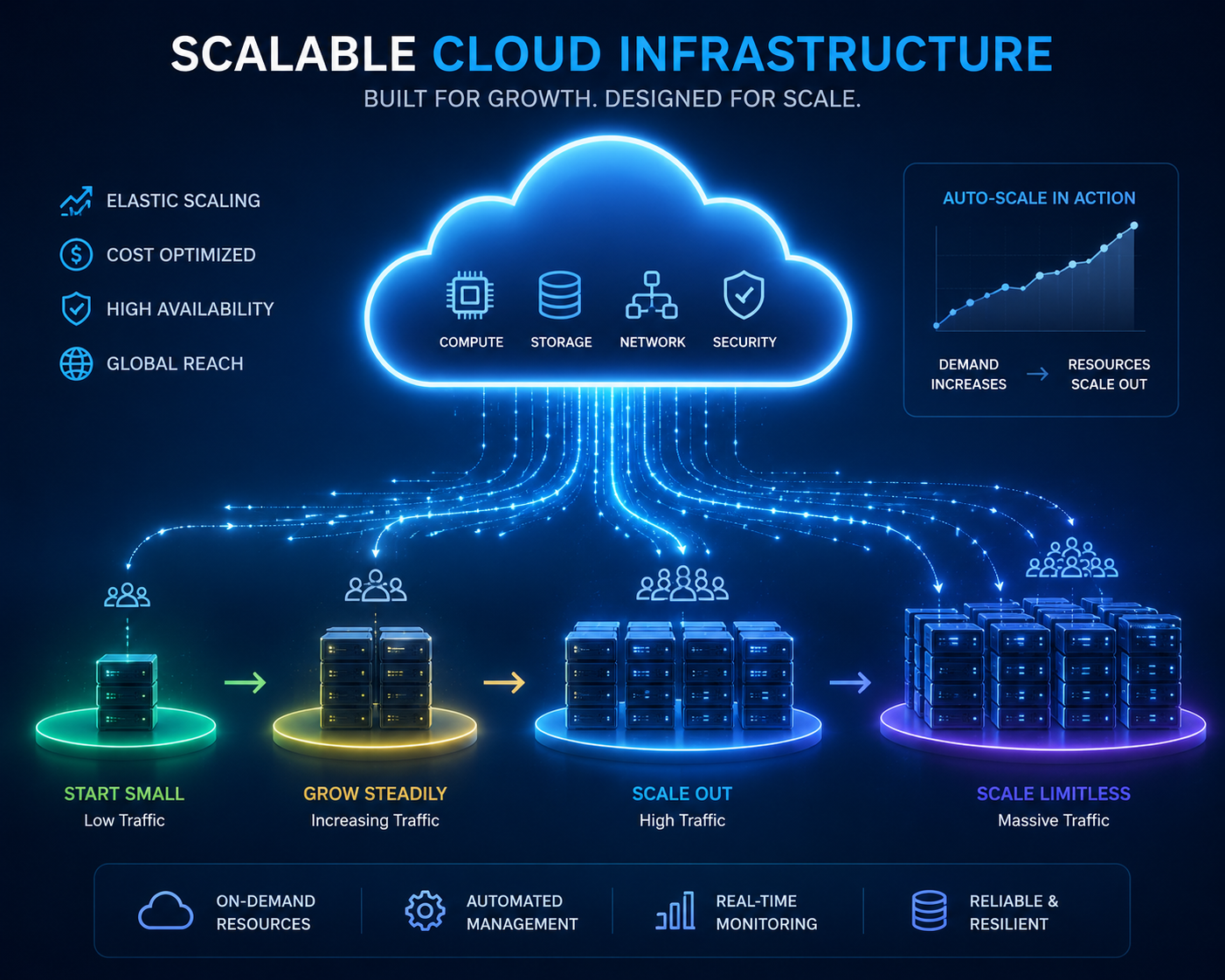
In an increasingly digital world, systems are expected to handle growing amounts of data, users, and complexity without compromising performance. Scalability improvements therefore represent a crucial area of future work, focusing on the ability of a system to expand its capacity and capabilities efficiently. Whether in web applications, enterprise platforms, or data-driven systems, scalability ensures that growth does not lead to bottlenecks, failures, or degraded user experiences.
At its core, scalability can be categorized into two primary types: vertical scalability and horizontal scalability. Vertical scalability, often referred to as scaling up, involves enhancing the capacity of a single machine by adding more resources such as CPU, memory, or storage. While this approach is relatively straightforward, it has physical and economic limitations. On the other hand, horizontal scalability, or scaling out, involves adding more machines or nodes to distribute the workload. This approach is more flexible and aligns well with modern distributed systems, making it a preferred strategy for future development.
One of the most significant enablers of scalability is cloud computing. Cloud platforms provide on-demand resources that can be scaled dynamically based on system requirements. This elasticity allows systems to handle sudden spikes in demand without over-provisioning resources during periods of low activity. Future work in this area can explore more efficient resource allocation strategies, cost optimization techniques, and improved orchestration tools to manage complex cloud environments.
Another critical component of scalability is load balancing. Load balancers distribute incoming traffic across multiple servers to ensure no single server becomes overwhelmed. By evenly distributing workloads, systems can maintain high availability and responsiveness. Future advancements may involve intelligent load balancing algorithms that use machine learning to predict traffic patterns and allocate resources proactively.
Microservices architecture also plays a vital role in enabling scalability. Unlike monolithic systems, where all components are tightly integrated, microservices break down applications into smaller, independent services. Each service can be developed, deployed, and scaled independently, allowing for greater flexibility and resilience. Future work can focus on improving communication between microservices, reducing latency, and enhancing service discovery mechanisms.
Data management is another area where scalability is essential. As systems generate and process massive volumes of data, traditional databases may struggle to keep up. Distributed databases and NoSQL solutions offer scalable alternatives that can handle large datasets across multiple nodes. Future developments may include more efficient data partitioning techniques, improved consistency models, and better integration with analytics tools.
Caching mechanisms also contribute significantly to scalability. By storing frequently accessed data in memory, caching reduces the need for repeated database queries, thereby improving system performance. Technologies such as in-memory data stores and content delivery networks (CDNs) can be leveraged to enhance scalability. Future work can explore adaptive caching strategies that dynamically adjust based on usage patterns.
Another important consideration is fault tolerance. As systems scale, the likelihood of component failures increases. Designing systems that can detect and recover from failures without disrupting operations is essential. Techniques such as redundancy, replication, and automated failover mechanisms can help ensure reliability. Future research can focus on predictive maintenance and self-healing systems that use AI to identify and address issues before they escalate.
Network infrastructure also plays a crucial role in scalability. High-speed and reliable networks are necessary to support communication between distributed components. Advances in networking technologies, such as edge computing and 5G, can further enhance scalability by reducing latency and bringing computation closer to the source of data. Future work can explore how these technologies can be integrated into existing systems to improve performance.
Monitoring and observability are equally important in scalable systems. As systems grow in complexity, it becomes more challenging to track performance and identify issues. Advanced monitoring tools provide insights into system behavior, enabling developers to make informed decisions. Future developments may include more sophisticated analytics, real-time dashboards, and automated alerting systems.
Security is another critical aspect that must be addressed when improving scalability. As systems expand, they become more vulnerable to cyber threats. Ensuring that security measures scale alongside the system is essential. This includes implementing robust authentication mechanisms, encryption protocols, and continuous security monitoring. Future work can focus on integrating security into every layer of the system architecture.
Finally, scalability is not just a technical challenge but also an organizational one. Teams must adopt practices that support scalable development, such as continuous integration and continuous deployment (CI/CD), agile methodologies, and effective collaboration. Training and skill development are also essential to ensure that teams can manage and maintain scalable systems.
In conclusion, scalability improvements are a fundamental aspect of future work, enabling systems to grow and adapt in a rapidly changing environment. By leveraging modern technologies such as cloud computing, microservices, and distributed databases, organizations can build systems that are not only scalable but also resilient and efficient. Addressing challenges related to performance, security, and complexity will be key to achieving sustainable growth. As demand continues to rise, scalability will remain a cornerstone of successful system design and innovation.