Synthetic Biology and Bio-Computing: Reshaping the Future of Technology
Synthetic biology and bio-computing are rapidly emerging fields poised to revolutionize technology, medicine, and manufacturing by harnessing the power of biological systems.
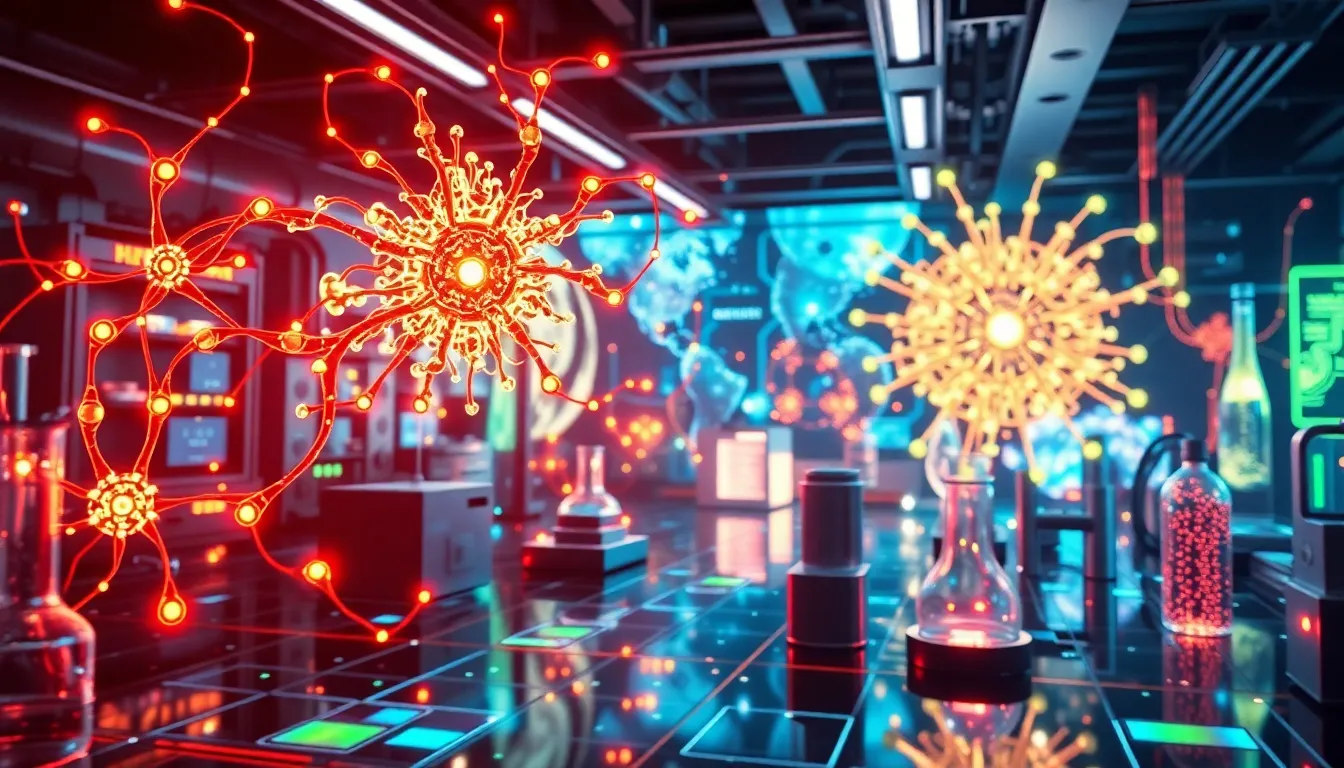
The burgeoning fields of synthetic biology and bio-computing are not merely extensions of existing scientific disciplines; they represent a fundamental paradigm shift in how technology is conceived, designed, and implemented. By intentionally engineering biological systems and harnessing the inherent computational capabilities of living matter, researchers are laying the groundwork for a future where biological circuits power devices, living organisms manufacture complex materials, and diagnostic tools operate with unprecedented precision. This convergence of biology and engineering promises to reshape industries from healthcare and pharmaceuticals to sustainable energy and advanced materials, ushering in an era of biologically-inspired innovation.
Key Takeaways
Synthetic biology enables the engineering of new biological functions and systems, moving beyond natural evolution.
Bio-computing utilizes biological molecules and cellular processes for information processing and computation.
These fields hold immense potential for revolutionizing medicine, diagnostics, materials science, and energy.
Ethical considerations and biosafety protocols are crucial as these technologies advance.
Significant investment and interdisciplinary collaboration are driving rapid progress in both areas.
The Dawn of Engineered Life: Understanding Synthetic Biology
Synthetic biology is an interdisciplinary field that seeks to design and construct new biological parts, devices, and systems, as well as to redesign existing natural biological systems for useful purposes. It differs from traditional genetic engineering in its emphasis on applying engineering principles—standardization, modularity, and abstraction—to biological design. Rather than simply transferring genes between organisms, synthetic biologists aim to build entirely new genetic circuits and metabolic pathways from scratch, often using custom-designed DNA sequences.
The core tenets of synthetic biology involve treating biological components as interchangeable parts or “bio-bricks” that can be assembled to create complex systems. This modular approach allows for the systematic design and construction of novel biological functions, much like engineers assemble electronic components to build a circuit. Early successes include the engineering of microorganisms to produce biofuels, pharmaceuticals like artemisinin (an anti-malarial drug), and biodegradable plastics. The ability to program cells to perform specific tasks opens up a vast array of possibilities, from targeted drug delivery within the human body to environmental bioremediation.
Foundations in Genetic Engineering and Systems Biology
While distinct, synthetic biology builds upon decades of research in genetic engineering, which established the foundational techniques for manipulating DNA. Its further evolution is deeply intertwined with systems biology—the study of biological systems at a holistic level, understanding how individual components interact to produce emergent properties. This systemic understanding is critical for designing predictable and robust synthetic biological systems, as isolated components often behave differently when integrated into a complex cellular environment. The challenge lies not just in creating new parts, but in ensuring these parts function reliably within the intricate network of a living cell.
Bio-Computing: Information Processing in the Living Realm
Bio-computing, or molecular computing, represents another frontier, leveraging biological molecules and cellular structures to perform computational tasks. Instead of silicon semiconductors, bio-computers utilize DNA, RNA, proteins, and even entire cells as computational components. The inherent ability of nucleic acids to store information, their predictable base pairing, and the enzymatic machinery that processes them, make them ideal candidates for nanoscale computation.
One of the most recognized early breakthroughs in bio-computing was Leonard Adleman's demonstration in 1994, where he used DNA to solve an instance of the Hamiltonian path problem, a complex computational challenge. This experiment showcased the massive parallelism inherent in DNA computing, as billions of molecules can simultaneously explore different computational paths. While still in its nascent stages for complex general-purpose computation, bio-computing holds immense promise for specific applications where its unique properties offer advantages.
DNA Computing and Cellular Automata
DNA computing harnesses the specificity of DNA base pairing and enzyme reactions (like ligation and restriction) to encode and process information. Strands of DNA can be designed to represent data, and their interactions can mimic logical operations. This approach offers incredibly high data density and parallelism, theoretically allowing for computations that surpass the capacity of conventional silicon-based computers for certain types of problems. Applications could include ultra-compact data storage and highly parallel search algorithms. The ongoing advancements in DNA sequencing and synthesis are continuously expanding the toolkit available to bio-computing researchers.
Beyond DNA, researchers are also exploring cellular automata, where individual cells act as computational units. By engineering cells to respond to specific chemical signals and produce outputs, vast networks of cells could theoretically perform computations distributed across a biological substrate. This could lead to 'smart' tissues that detect disease and autonomously respond, or living sensors with unparalleled sensitivity.
Transformative Applications Across Industries
Both synthetic biology and bio-computing are poised to deliver groundbreaking solutions across numerous sectors.
Medicine and Diagnostics
In medicine, synthetic biology is enabling the creation of engineered immune cells for advanced cancer therapies (e.g., CAR T-cells), bacteria designed to deliver drugs to specific tumor sites, and microorganisms that produce novel antibiotics. Bio-computing offers the prospect of 'smart' diagnostic devices that operate even at the cellular level, detecting disease biomarkers with high specificity and sensitivity, potentially even before symptoms manifest. Biological sensors could be integrated into wearables or even implanted, monitoring health in real-time and providing personalized medical feedback. The development of new therapeutics and diagnostic tools often involves multidisciplinary teams, reflecting the complex nature of these innovations. Researchers are developing new methods for faster drug discovery, utilizing these technologies to screen compounds against various biological targets, significantly accelerating the process.
Materials Science and Manufacturing
Synthetic biology offers unprecedented control over the production of materials. Microorganisms can be programmed to synthesize polymers, spider silk, self-healing materials, and even materials with electronic properties, all through sustainable biological processes. This moves away from petrochemically-derived products towards a bio-economy. For instance, bacteria can be engineered to produce precursors for jet fuel or to sequester carbon dioxide, offering environmentally friendly alternatives to traditional industrial processes. Bio-manufacturing has the potential to decentralize production and reduce reliance on finite resources, representing a significant shift in global economic and business models.
Energy and Environmental Solutions
The potential for sustainable energy and environmental remediation is immense. Engineered microbes can be used to convert waste biomass into biofuels, capture atmospheric carbon dioxide, or degrade pollutants in soil and water. The efficiency of natural photosynthesis can be enhanced through synthetic biology to create more efficient solar energy conversion systems. Imagine algae farms genetically optimized to produce biofuels or specialized bacteria deployed to clean up oil spills with greater efficacy than current methods. These biological solutions offer a pathway to a more sustainable future.
Ethical Considerations and the Future Landscape
As with any powerful technology, synthetic biology and bio-computing raise significant ethical, safety, and societal questions. The ability to create new forms of life or to profoundly alter existing ones necessitates careful consideration of potential risks, including unintended ecological impacts, biosafety concerns, and the implications for human identity and evolution. Rigorous regulatory frameworks, public engagement, and robust scientific oversight are paramount to ensure responsible development and deployment.
International bodies and national governments are beginning to grapple with the regulatory challenges posed by these technologies, aiming to strike a balance between fostering innovation and ensuring public safety. The future landscape will likely involve continued rapid technological advancement, coupled with an increasing focus on ethical guidelines and transparent governance. Interdisciplinary dialogues involving scientists, ethicists, policymakers, and the public will be crucial in navigating these complex waters. The future of work and employment will also be impacted, requiring new skills and ethical frameworks.
Frequently Asked Questions
What is the primary difference between synthetic biology and genetic engineering?
While genetic engineering typically involves transferring existing genes between organisms to introduce a new trait, synthetic biology aims to design and construct entirely new biological parts, devices, and systems from scratch, applying engineering principles like modularity and standardization to biological design. It seeks to program biology anew, rather than just edit existing genetic code.
How far are we from widespread, practical bio-computers?
Widespread general-purpose bio-computers capable of rivaling silicon-based systems for arbitrary tasks are still a distant prospect. However, specialized bio-computing systems designed for specific applications, such as biological sensors, intelligent drug delivery systems, and ultra-compact data storage, are much closer to practical implementation and are already being explored in research and early development phases.
What are the main ethical concerns surrounding these technologies?
Key ethical concerns include biosafety risks (e.g., unintended release of engineered organisms), potential misuse (e.g., bioweapons), environmental impacts (e.g., disruption of ecosystems), implications for human identity and genetic privacy, and questions of equitable access and benefit sharing. Responsible innovation requires continuous vigilance and proactive engagement with these issues.