The "Human-in-the-Loop" Economy: Blending AI with Human Expertise
The "Human-in-the-Loop" (HITL) economy is redefineing work, integrating human cognitive abilities with AI to enhance efficiency, accuracy, and innovation across diverse industries.
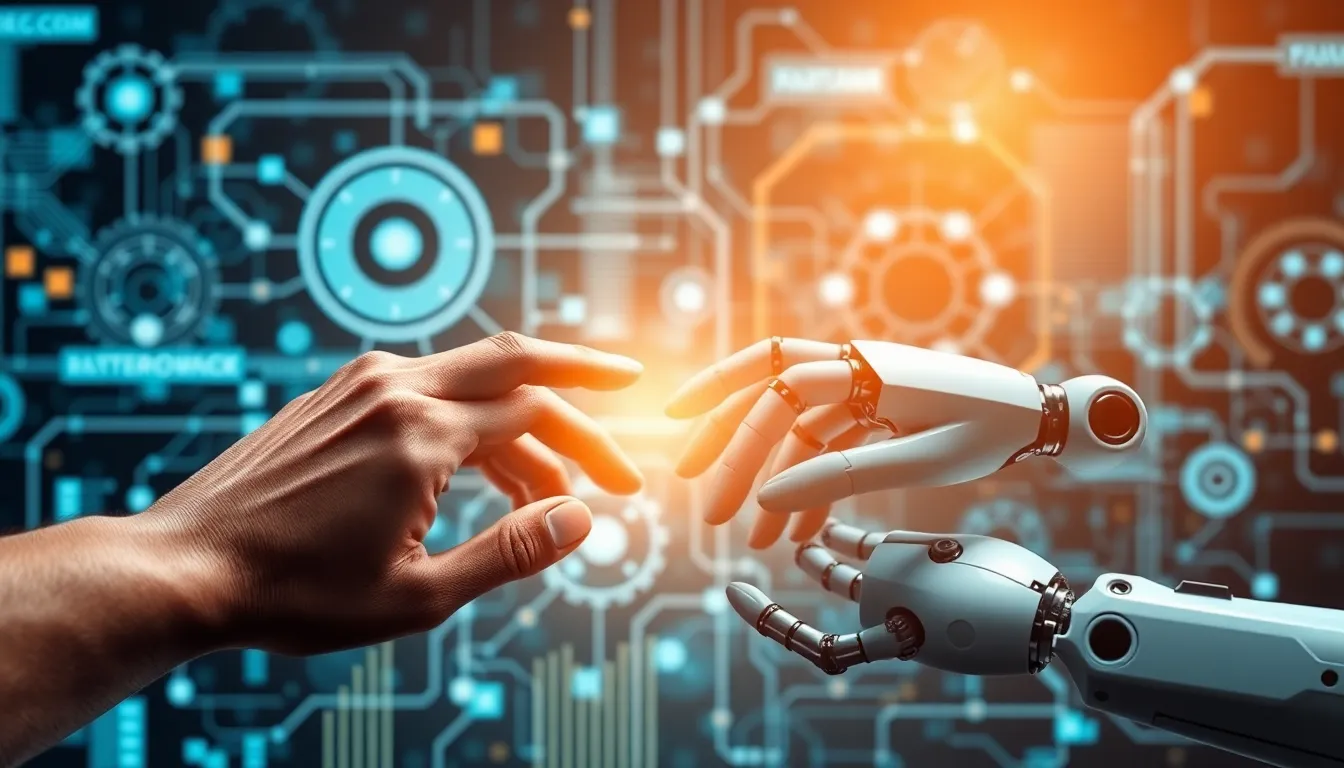
The convergence of artificial intelligence with human intellect is ushering in a transformative era known as the "Human-in-the-Loop" (HITL) economy. This paradigm shift moves beyond the traditional narrative of AI replacing human jobs, instead positing a synergistic relationship where human oversight, judgment, and creativity remain indispensable. This article explores the multifaceted dimensions of the HITL economy, examining its operational mechanisms, sector-specific implications, ethical considerations, and its profound impact on the future of work.
Key Takeaways
Synergistic Integration: The HITL economy emphasizes a collaborative model where AI systems augment human capabilities rather than replacing them, leading to enhanced performance and decision-making.
Improved Accuracy and Efficiency: Human input at critical stages of AI processes, such as data annotation, model validation, and exception handling, significantly improves the accuracy and reliability of AI outputs.
Adaptability and Innovation: The human capacity for complex problem-solving, ethical reasoning, and creative thinking enables AI systems to adapt to novel situations and drive innovation.
Ethical AI Development: Human oversight is crucial for mitigating biases, ensuring fairness, and upholding ethical standards in the development and deployment of AI technologies.
Understanding the Human-in-the-Loop Model
The Human-in-the-Loop model is predicated on the idea that certain tasks within an AI's lifecycle benefit profoundly from human intervention. This intervention can occur at various stages, from the initial data collection and annotation to the refinement of algorithms and the handling of edge cases that defy algorithmic logic. At its core, HITL recognizes the inherent limitations of current AI systems, particularly in areas requiring nuanced judgment, common sense reasoning, emotional intelligence, or highly creative solutions. Humans provide the cognitive bridge that allows AI to overcome these hurdles, transforming raw data into actionable insights and robust applications.
Data Annotation and Curation
One of the most foundational applications of HITL is in data annotation and curation. High-quality, accurately labeled data is the lifeblood of machine learning models. Without carefully prepared datasets, AI algorithms struggle to learn patterns and make accurate predictions. Human annotators are employed to label images, categorize text, transcribe audio, and identify specific features within vast datasets. This meticulous work ensures that AI systems are trained on reliable information, minimizing biases and improving overall model performance. The demand for skilled data annotators highlights a growing niche within the digital economy, emphasizing the human role in shaping AI intelligence from its very inception.
Model Training and Validation
Beyond initial data preparation, human expertise plays a critical role in the training and validation phases of AI development. During training, human feedback can guide models toward more accurate outputs, especially in complex or ambiguous scenarios. For instance, in medical image analysis, radiologists might confirm or correct AI diagnoses, helping the system learn from its errors. In natural language processing, linguists might refine AI's understanding of context and semantics. Validation involves humans rigorously testing AI models against real-world data, identifying instances where the AI fails or performs poorly. This iterative process of human review and correction is essential for developing robust and reliable AI systems that can operate effectively in diverse environments.
Exception Handling and Edge Cases
No AI system is perfect, and all will encounter situations or "edge cases" that fall outside their learned parameters. These exceptions often require human ingenuity and common sense. Consider autonomous vehicles: while AI handles routine driving tasks, human operators may be needed to intervene in unforeseen circumstances, such as navigating complex construction zones or reacting to highly unusual road events. Similarly, in customer service, AI chatbots can manage common queries, but complex or emotionally charged interactions are typically escalated to human agents. This division of labor ensures that routine tasks are automated for efficiency, while intricate problems benefit from human problem-solving skills, leading to more resilient and user-friendly systems. Read more about this synergy in the realm of.
Sector-Specific Applications of HITL
The HITL model is not confined to a single industry but is rapidly being adopted across a spectrum of sectors, each leveraging human-AI collaboration to address unique challenges and unlock new efficiencies.
Healthcare and Medicine
In healthcare, HITL is revolutionizing diagnostics, treatment planning, and research. AI can analyze vast amounts of medical data, including patient records, imaging scans, and genomic information, to identify patterns and assist with early disease detection. However, human medical professionals provide the crucial oversight, interpreting AI-generated insights, considering individual patient contexts, and making final clinical decisions. Surgeons are using AI-powered robotic systems that offer enhanced precision, but human dexterity and judgment guide every movement. This collaboration improves diagnostic accuracy, personalizes treatment plans, and reduces human error in complex medical procedures. The future of medicine increasingly involves a partnership between advanced AI and skilled practitioners.
Finance and Banking
The financial sector utilizes HITL for fraud detection, risk assessment, and personalized financial advice. AI algorithms can detect suspicious transactional patterns indicative of fraud far quicker than human analysts. Nonetheless, human experts investigate these alerts, distinguishing genuine anomalies from false positives, thereby preventing unnecessary disruptions to legitimate transactions. Similarly, AI assists in evaluating credit risk and optimizing investment portfolios, but human financial advisors provide the contextual understanding, ethical considerations, and client relationship management that AI cannot replicate. This blending of algorithmic speed with human wisdom ensures both security and tailored service.
Education and Skills Development
In education, HITL is transforming learning experiences and skill acquisition. AI-powered platforms can offer personalized learning paths, identify knowledge gaps, and provide immediate feedback to students. However, human educators remain indispensable for motivating students, fostering critical thinking, facilitating discussions, and developing social-emotional skills. AI handles the data-driven aspects of learning, while teachers focus on the holistic development of students. This collaborative approach enhances learning outcomes and prepares individuals for a future where adaptability and critical thinking are paramount. Explore how AI is shaping the future skills landscape.
Ethical Considerations and Challenges
While the HITL economy offers significant advantages, it also presents a unique set of ethical considerations and operational challenges that must be addressed carefully.
Bias Mitigation and Fairness
One of the most critical roles for humans in the loop is to ensure fairness and mitigate bias in AI systems. If training data is biased, the AI will perpetuate and amplify those biases. Human oversight is essential for identifying and correcting these biases, especially in sensitive applications like criminal justice or hiring. Researchers and ethicists argue that diverse human teams are crucial for auditing AI systems for fairness, ensuring that they do not systematically disadvantage certain groups. This requires not only technical expertise but also a deep understanding of societal contexts and ethical principles.
Data Privacy and Security
The collection and processing of vast amounts of data by both humans and AI raise significant concerns about data privacy and security. Organizations adopting HITL models must implement robust protocols to protect sensitive information, comply with regulations like GDPR, and ensure transparency in data usage. The human element in data annotation and validation also introduces potential vulnerabilities if proper security measures and training are not in place. Maintaining the integrity and confidentiality of data is paramount for building trust in HITL systems.
Job Displacement and Reskilling
While the HITL economy creates new roles such as AI trainers, data annotators, and AI ethicists, it also shifts the nature of existing jobs. Some routine tasks may be automated, leading to concerns about job displacement. The focus, therefore, must be on reskilling and upskilling the workforce to prepare for these new roles and collaborations. Governments, educational institutions, and businesses have a shared responsibility to invest in lifelong learning initiatives that equip individuals with the skills needed to thrive in a human-AI collaborative environment. Understand the broader implications for the workforce.
The Future of Work in the HITL Economy
The Human-in-the-Loop economy is not merely a transient phase; it represents a fundamental reshaping of the future of work. The traditional boundaries between human and machine tasks are blurring, giving rise to "centaur" teams where humans and AI work together seamlessly, each contributing their unique strengths. This shift necessitates a re-evaluation of educational curricula, corporate training programs, and even the very definition of productivity.
Organizations that master the art of integrating human judgment with AI efficiency will gain a significant competitive advantage. Success in this evolving landscape will depend on fostering a culture of continuous learning, ethical innovation, and collaborative problem-solving. As AI capabilities continue to advance, the human role will likely evolve from overseeing explicit tasks to defining strategic objectives, interpreting complex outcomes, and ensuring the responsible and beneficial deployment of intelligent systems. The focus will move from pure automation to intelligent augmentation, where technology empowers human potential rather than diminishes it.
Frequently Asked Questions
What is the core principle of the Human-in-the-Loop economy?
The core principle of the Human-in-the-Loop (HITL) economy is the synergistic collaboration between humans and artificial intelligence, where human intelligence, judgment, and creativity are integrated into various stages of AI system development and operation to enhance performance, accuracy, and ethical deployment.
How does HITL improve AI system performance?
HITL improves AI system performance by providing high-quality labeled data for training, validating model outputs, handling complex edge cases, and mitigating biases. Human input helps AI learn more effectively from real-world nuances and adapt to dynamic environments, leading to more robust and reliable systems.
What new job roles are emerging in the HITL economy?
The HITL economy is creating new job roles such as AI trainers, data annotators, AI ethicists, AI auditors, and human-AI interface designers. These roles require a blend of technical understanding, domain expertise, and critical thinking to manage and optimize AI-human collaboration.
What are the main ethical concerns in a HITL framework?
Key ethical concerns in a HITL framework include mitigating algorithmic bias, ensuring data privacy and security, addressing potential job displacement through reskilling initiatives, and establishing clear accountability for decisions made by hybrid human-AI systems. These issues require careful consideration and robust governance frameworks.