Unlocking the Night: The Deep Science Behind Your Best Sleep Yet
Ever wonder why some nights feel restorative and others leave you groggy? We're diving into the fascinating science of sleep to uncover what truly happens when you close your eyes.

You’ve been there. Staring at the ceiling at 2 AM, mind racing, or waking up feeling like you’ve run a marathon instead of resting. It’s a familiar, frustrating experience for millions, and frankly, it’s a problem that’s far more serious than just feeling tired. Sleep isn't some passive downtime; it’s an incredibly active, complex process that our bodies and brains absolutely depend on for survival and optimal function. For too long, we've treated sleep as a luxury, something to be cut short when deadlines loom or social plans beckon. But the science tells a very different story, one of profound biological necessity.
We're not just powering down; we're running vital maintenance checks, consolidating memories, and literally cleaning out our brains. Ignore that reality, and you're setting yourself up for a cascade of health issues, from compromised immunity to impaired cognitive function. It’s not just about getting seven or eight hours, either. It’s about the quality of those hours, the intricate dance of hormones and brain waves that orchestrates true rest and repair.
Key Takeaways:
- Sleep isn't passive; it's a dynamic period crucial for physical and mental health.
- Circadian rhythms, regulated by light and darkness, govern our natural sleep-wake cycles.
- Our brains actively clean out metabolic waste and consolidate memories during different sleep stages.
- Hormones like melatonin and cortisol play a critical role in signaling sleep and wakefulness.
- Prioritizing sleep hygiene can dramatically improve sleep quality and overall well-being.
At the core of our slumber lies the circadian rhythm, our internal 24-hour clock. This isn't just a suggestion; it's a hard-wired biological imperative, primarily influenced by light exposure. Think of it as your body’s master conductor, synchronizing everything from hormone release to body temperature with the rising and setting of the sun. When you're exposed to bright light, especially blue light from screens, it tells your brain, “Hey, it’s daytime! Stay alert!” That’s great in the morning, but terrible at night. Dr. Sarah Chen, a neuroscientist at the University of California, Berkeley, emphasizes this point. “Disrupting your circadian rhythm with late-night screen time is like trying to drive a car with one foot on the gas and the other on the brake,” she explains. “Your body gets mixed signals, and good sleep becomes an uphill battle.” The blue wavelength light from phones and tablets, specifically, is a potent inhibitor of melatonin, the hormone that signals to your body it’s time to wind down. Keeping a consistent sleep schedule, even on weekends, helps reinforce this natural rhythm, making it easier for your body to fall asleep and wake up naturally.
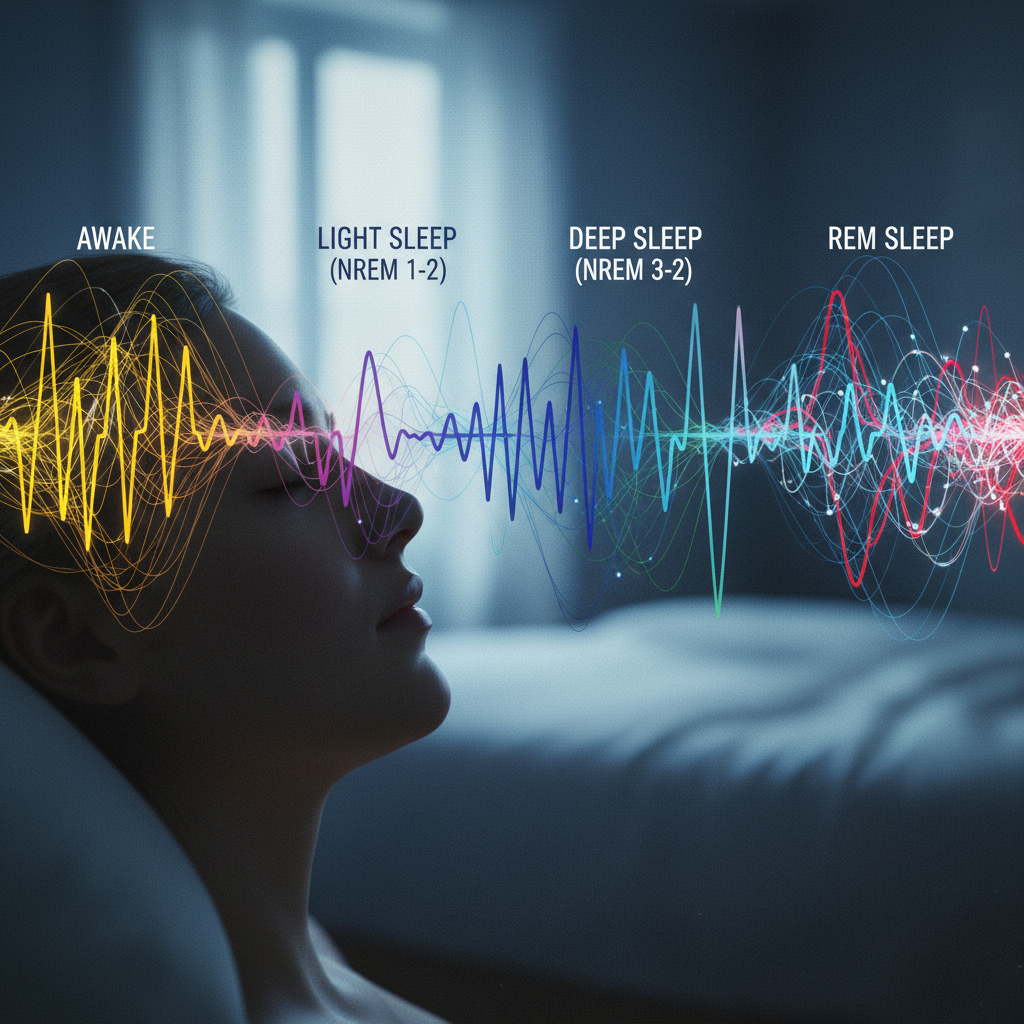
Once you finally drift off, your brain doesn't just switch off. It cycles through distinct sleep stages, each with its own crucial functions. First, there’s Non-Rapid Eye Movement (NREM) sleep, which itself has three substages. Stage one is that light, drowsy phase, where you might feel a sudden jerk. Stage two is a bit deeper; your heart rate and breathing slow, and your body temperature drops. Then comes stage three, often called slow-wave sleep or deep sleep. This is where the heavy lifting happens: tissue repair, muscle growth, hormone release, and immune system strengthening. It’s during this deep sleep that your brain waves slow significantly, allowing for critical physical restoration. You can learn more about brain activity during these stages and how researchers use advanced tools to map these complex patterns.
After a period of NREM, you enter Rapid Eye Movement (REM) sleep, where most of your vivid dreaming occurs. During REM, your brain becomes incredibly active, often mirroring wakefulness, but your muscles are temporarily paralyzed to prevent you from acting out your dreams. This stage is vital for emotional regulation, memory consolidation, and creative problem-solving. It’s when your brain takes the day’s experiences, files them away, and integrates new information. A full night’s sleep typically sees us cycling through NREM and REM several times, with REM periods lengthening as the night progresses. Skimp on sleep, and you’re shortchanging your brain on these essential processes.
But the brain’s nighttime work isn’t just about processing information and dreaming. It’s also about cleaning house. Seriously. Researchers have discovered what’s called the glymphatic system, a kind of waste-removal system unique to the brain. During deep sleep, the spaces between brain cells actually expand by up to 60 percent, allowing cerebrospinal fluid to flush out metabolic byproducts that accumulate during wakefulness. One of the most significant of these byproducts is amyloid-beta, a protein that’s implicated in the development of Alzheimer’s disease. Without adequate sleep, this cellular debris can build up, potentially contributing to neurodegenerative disorders down the line. It’s a compelling argument for prioritizing those deep, restorative hours.
Hormones are the unsung heroes of our sleep-wake cycle. Melatonin, often called the “sleep hormone,” is produced by the pineal gland in your brain when darkness falls. It signals to your body that it’s time to get sleepy, lowering body temperature and blood pressure. Conversely, cortisol, the “stress hormone,” typically peaks in the morning, helping you wake up and feel alert. Its levels should drop significantly by evening. When this delicate balance is thrown off—say, by chronic stress or irregular sleep patterns—it can wreak havoc on your ability to fall asleep and stay asleep. “It’s a finely tuned symphony,” says Dr. Marcus Thorne, a sleep specialist at the Mayo Clinic. “When one instrument is out of tune, the whole performance suffers. Getting your hormonal rhythm right is foundational for good sleep.” And it's not just melatonin and cortisol. Adenosine, a neurochemical that builds up throughout the day, acts like a sleep-inducing agent; higher levels mean more sleep pressure. Caffeine, interestingly enough, works by blocking adenosine receptors, which is why it keeps you awake.
So, what can we do to align ourselves with this intricate biological machinery? It boils down to prioritizing sleep hygiene. Start by keeping a consistent sleep schedule. Go to bed and wake up at roughly the same time every day, even on weekends. Your body loves predictability. Make your bedroom a sanctuary: dark, quiet, and cool, ideally between 60 and 67 degrees Fahrenheit. Limit screen time an hour or two before bed, and if you must use devices, try blue light filters. Exercise regularly, but not too close to bedtime. And watch your diet; heavy meals, excessive caffeine, and alcohol, especially late in the day, can seriously disrupt sleep architecture. Think of these strategies not as restrictive rules, but as ways to support your natural rhythms. Understanding the link between sleep and cognitive function highlights why these habits are so crucial for learning and mental sharpness.
The repercussions of neglecting sleep extend far beyond just feeling tired. Chronic sleep deprivation, defined as consistently getting less than the recommended 7-9 hours per night, is linked to a litany of serious health problems. We’re talking increased risk of heart disease, type 2 diabetes, obesity, high blood pressure, and weakened immune function. It also significantly impacts mental health, exacerbating anxiety, depression, and mood swings. Productivity at work plummets, decision-making suffers, and even your creativity can take a hit. The economic impact of sleep loss is staggering, costing billions annually in lost productivity and healthcare expenditures.
It’s not that simple, though. Individual sleep needs can vary slightly, and some people genuinely function better on slightly less or more sleep than the average. Genetics play a role, as do factors like age and overall health. But the vast majority of adults need a solid seven to nine hours. Listening to your body, understanding your own unique rhythms, and making conscious choices to support healthy sleep habits are paramount. It’s a personal journey for sure, but one grounded in universal biological principles. Ignoring sleep's profound scientific basis is like ignoring gravity; eventually, something’s going to come crashing down.
Frequently Asked Questions:
- Can I catch up on sleep on the weekends? While an extra hour or two might offer some temporary relief, you can't fully