The Invisible Burden: Why Everyone Feels Mentally Exhausted
Ever feel like your brain is running on fumes, even when your body's rested? You're not alone. We're all grappling with a new kind of fatigue, a pervasive mental exhaustion that's become the default setting for modern life.

You wake up after seven hours of sleep, maybe even eight. Your body feels okay, no real aches or pains. Yet, your mind feels like it's already run a marathon. That familiar fog, the subtle ache behind your eyes, the sheer effort it takes just to string together a coherent thought for your morning coffee order. Sound familiar? You’re not alone. This isn't just a fleeting feeling; it’s a pervasive state for millions, a quiet, invisible burden we’re all carrying. We’re in an epidemic of mental exhaustion, and it's not simply about working too many hours.
Key Takeaways:
- Digital overload from constant notifications and information streams is a primary driver of widespread mental fatigue.
- Blurred lines between work and home, exacerbated by remote tools, prevent our brains from truly unplugging and recovering.
- Societal pressures, global anxieties, and the relentless comparison culture of social media keep our minds in a perpetual state of vigilance.
- Decision fatigue and the myth of multitasking deplete cognitive reserves, leaving little capacity for deep focus or genuine rest.
- Addressing this exhaustion isn't about working harder, but about strategic mental hygiene and re-establishing boundaries.
The Digital Deluge
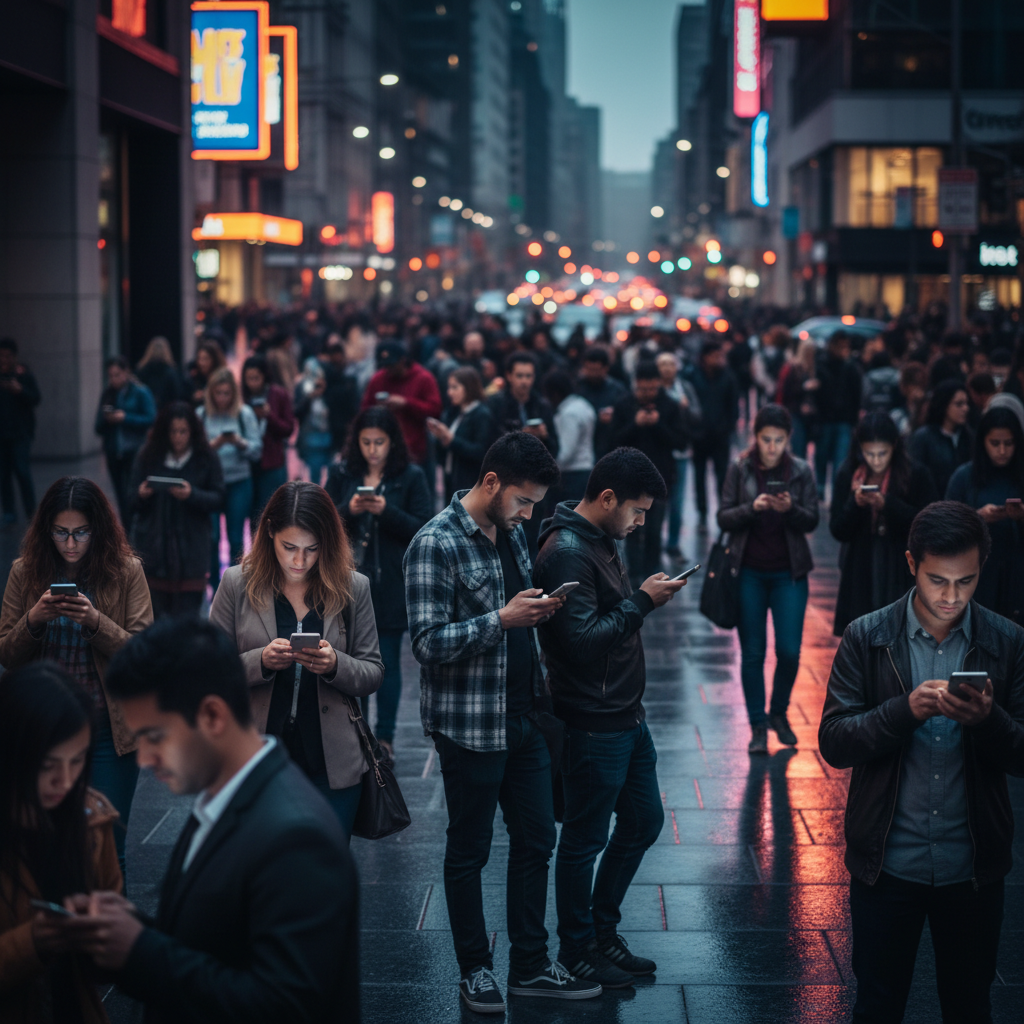
Let's be honest: our brains weren't built for this. We're living in an always-on world, bombarded by more information in a single day than our ancestors likely encountered in a month, maybe even a year. Every ping, every notification, every news alert, every email landing in your inbox demands a sliver of your attention. It's a relentless torrent, a digital deluge that never truly stops. Your phone is a portal, yes, but it’s also a constant open tap of cognitive demand. Dr. Evelyn Reed, a neuroscientist specializing in cognitive load at the University of California, Berkeley, puts it plainly: "It's not just the volume of information, it's the velocity. Our brains are constantly processing, filtering, and prioritizing, often without us even realizing it. That background hum of cognitive effort is incredibly draining."
And it’s not just the sheer volume. It’s the fragmented nature of it. We're constantly switching contexts, jumping from a work email to a family text to a news headline about a distant crisis. Each switch costs mental energy. We trick ourselves into thinking we're efficient, but what we're really doing is burning through our cognitive fuel at an alarming rate. It leaves us feeling scattered, unable to focus, and utterly wiped out by dinnertime. Want to dive deeper into how digital tools impact us? Check out this piece on technology's double-edged sword.
Blurred Lines and the Always-On Culture
Remember when work ended when you left the office? For many, those days feel like a distant memory. The rise of remote and hybrid work models, while offering flexibility, has also obliterated the physical and psychological boundaries that once protected our downtime. Your laptop is now often just steps away from your bed, your work phone buzzing right there on the kitchen counter. There’s no commute to decompress, no clear separation. "The lines between professional and personal life have blurred into an indistinguishable smudge," notes Professor Mark Chen, a sociologist at the University of Chicago, who has studied modern work habits for decades. "We're always 'on call,' always checking, always just one Slack message away from being back in work mode. It's exhausting because our brains never truly get to clock out."
But it’s not just about work. Even our personal lives feel increasingly demanding. Managing schedules, coordinating childcare, handling household logistics, responding to endless group chats – it’s a constant stream of administrative tasks, a hidden second shift that requires mental organization and effort. This perpetual state of readiness, this inability to fully disconnect, robs us of the crucial mental downtime needed for recovery and creative thought. This shift in how we work and live has profound implications for the future of work.
The Social Media Paradox
We scroll, we post, we compare. Social media was supposed to connect us, and in some ways, it does. Yet, it's also a primary source of mental drain. There’s the constant pressure to present a curated version of ourselves, to keep up appearances. Then there’s the endless comparison to idealized lives, the fear of missing out (FOMO), and the subtle anxiety of waiting for likes or comments. It's a performance, and performances are tiring. Our brains are wired for social connection, but this kind of hyper-curated, often superficial interaction can leave us feeling more isolated and inadequate than connected.
Global Anxieties and Decision Fatigue
Turn on the news, open an app, and you’re instantly confronted with a litany of global crises: climate change, political turmoil, economic uncertainty, health scares. Our brains are designed to react to threats, to problem-solve. But when the threats are constant, global, and largely beyond our individual control, it creates a persistent, low-level hum of anxiety. It's like your internal alarm system is always buzzing, never fully disarmed. This constant state of vigilance, even if subconscious, saps mental energy.
Then there’s decision fatigue. From the trivial to the significant, modern life demands an unprecedented number of choices. What to eat for breakfast, which streaming service to pick, what email to respond to first, which route to take to work, what social event to attend, which investment strategy to pursue. Every decision, no matter how small, consumes a sliver of our cognitive resources. By the end of the day, our capacity for rational choice is depleted, leaving us feeling indecisive, irritable, and mentally spent. The pressures of the modern economy certainly don't help. Learn more about the broader business economy and its impact.
The Myth of Productivity and Deep Work Deficit
We’re told to multitask, to optimize every second. We juggle projects, answer emails during meetings, and try to listen to podcasts while doing chores. But multitasking is largely a myth. Our brains don't actually do multiple things simultaneously; they rapidly switch between them. And each switch is inefficient, costing us time and, crucially, mental energy. We’ve lost the art of deep work, of sustained, focused concentration on a single task. This constant fragmentation means we rarely experience the satisfaction of truly immersing ourselves in something, leading to a sense of unfulfillment and, you guessed it, more exhaustion. Learning how to manage these demands requires new education skills.
Sleep Deprivation: The Obvious Culprit
It feels almost too simple to mention, yet it’s undeniably central. Many of us aren't getting enough quality sleep. And guess what's often to blame? Our screens. The blue light from phones, tablets, and computers suppresses melatonin production, making it harder to fall asleep. The constant stimulation right up until bedtime keeps our minds racing. Sleep isn't just a physical rest; it's when our brains consolidate memories, process emotions, and clear out metabolic waste. Without adequate, restorative sleep, we start the next day already in a deficit, compounding the cycle of mental exhaustion.
Finding a Path Forward
So, what do we do? It’s not about abandoning technology or retreating to a cave. That’s not realistic. But it is about recognizing the problem and making intentional choices. It’s about creating boundaries where none seem to exist. Can you set specific times for checking emails? Can you turn off notifications for non-essential apps? Could you implement a "digital sunset" an hour before bed? These aren’t magic bullets, but they’re starting points. It’s about prioritizing single-tasking over multitasking, scheduling real breaks, and consciously choosing moments of quiet. It’s about mental hygiene, just as vital as physical hygiene.
This isn’t about individual failure. It's a societal challenge, a byproduct of rapid technological advancement and cultural shifts. Acknowledging it is the first step toward figuring out how to better protect our most valuable asset: our minds.
Frequently Asked Questions:
What's the difference between mental exhaustion and burnout? Mental exhaustion is a general state of cognitive fatigue, feeling drained and unfocused. Burnout is a more severe, prolonged response to chronic workplace stress, characterized by emotional exhaustion, cynicism, and reduced efficacy. Mental exhaustion can be a precursor to burnout.
Can diet affect mental energy? Absolutely. A diet rich in whole foods, healthy fats, and complex carbohydrates can provide sustained energy for your brain. Sugary, processed foods can lead to energy crashes, while dehydration also significantly impacts cognitive function. Proper nutrition is foundational for brain health.
How quickly can I recover from mental exhaustion? Recovery time varies widely depending on the severity and underlying causes. Small changes like digital detoxes and better sleep hygiene can offer noticeable improvements within days or weeks. For deeper exhaustion, consistent self-care, stress reduction, and potentially professional support might be needed over several months.
Is this a new phenomenon, or have people always felt this way? While people have always experienced fatigue, the current scale and specific drivers of mental exhaustion, particularly related to digital overload and the always-on culture, are largely modern phenomena. The speed and intensity of information flow are unprecedented in human history.